
This diplomatic meeting made it possible to present Pioneer Ski Park, an important inclusive project in Kazakhstan, to recall the historical contribution of the Diplomatic Organization of Autistan to its development since 2016, and to open prospects for cooperation on autism, accessibility, and a future National Autism Plan for Kazakhstan.
On 15 May 2026, the Diplomatic Organization of Autistan was received at the Embassy of the Republic of Kazakhstan in Brasília for a meeting mainly devoted to the current situation of Pioneer Ski Park, an important inclusive project located in the mountains near Almaty, as well as to possibilities for future cooperation concerning autism, accessibility and public policies.
This meeting took place with the Deputy Ambassador of the Republic of Kazakhstan in Brazil, in an official, serious and constructive diplomatic setting.
The immediate objective was to present concerns related to the fact that the Pioneer site is affected by an official decision of the Akimat of Almaty within the framework of the development of the Almaty mountain cluster. This situation is particularly concerning, because Pioneer is an inclusive project built over more than eleven years, with programmes, infrastructure, children, families, concrete experience, and a particular importance for autism in Kazakhstan.
The meeting also made it possible to open a broader reflection: the role that the Diplomatic Organization of Autistan could play in the future to help improve the understanding of autism in Kazakhstan, particularly through analyses, proposals and work related to public policies, accessibility and a possible National Autism Plan.
This meeting also shows that the Diplomatic Organization of Autistan can present serious work in a real diplomatic setting, with prepared documents, international comparative analyses, concrete cooperation with a Kazakh field practitioner, and useful proposals for public authorities.
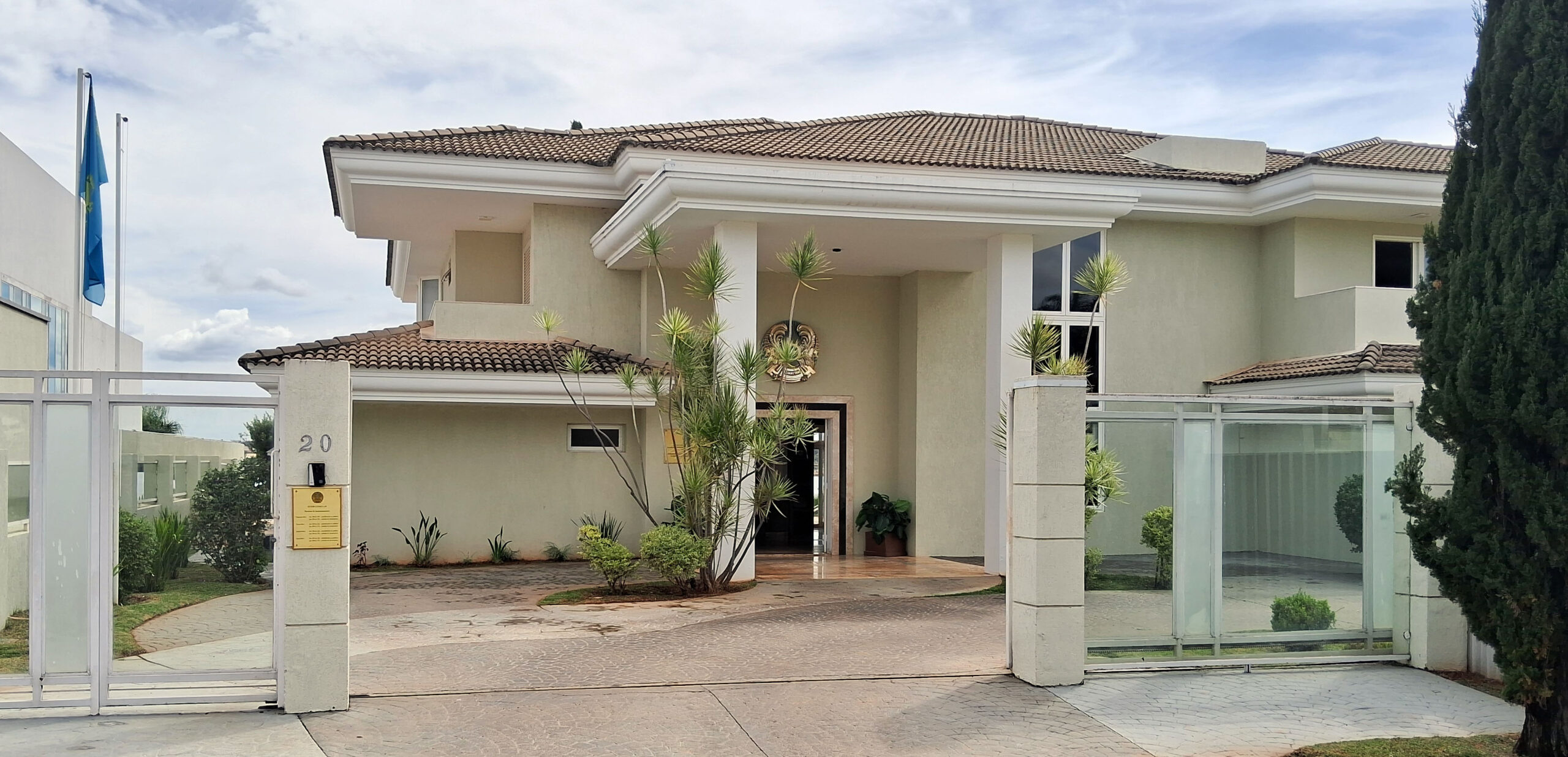
Facade of the Embassy of the Republic of Kazakhstan in Brasília, where the meeting took place.
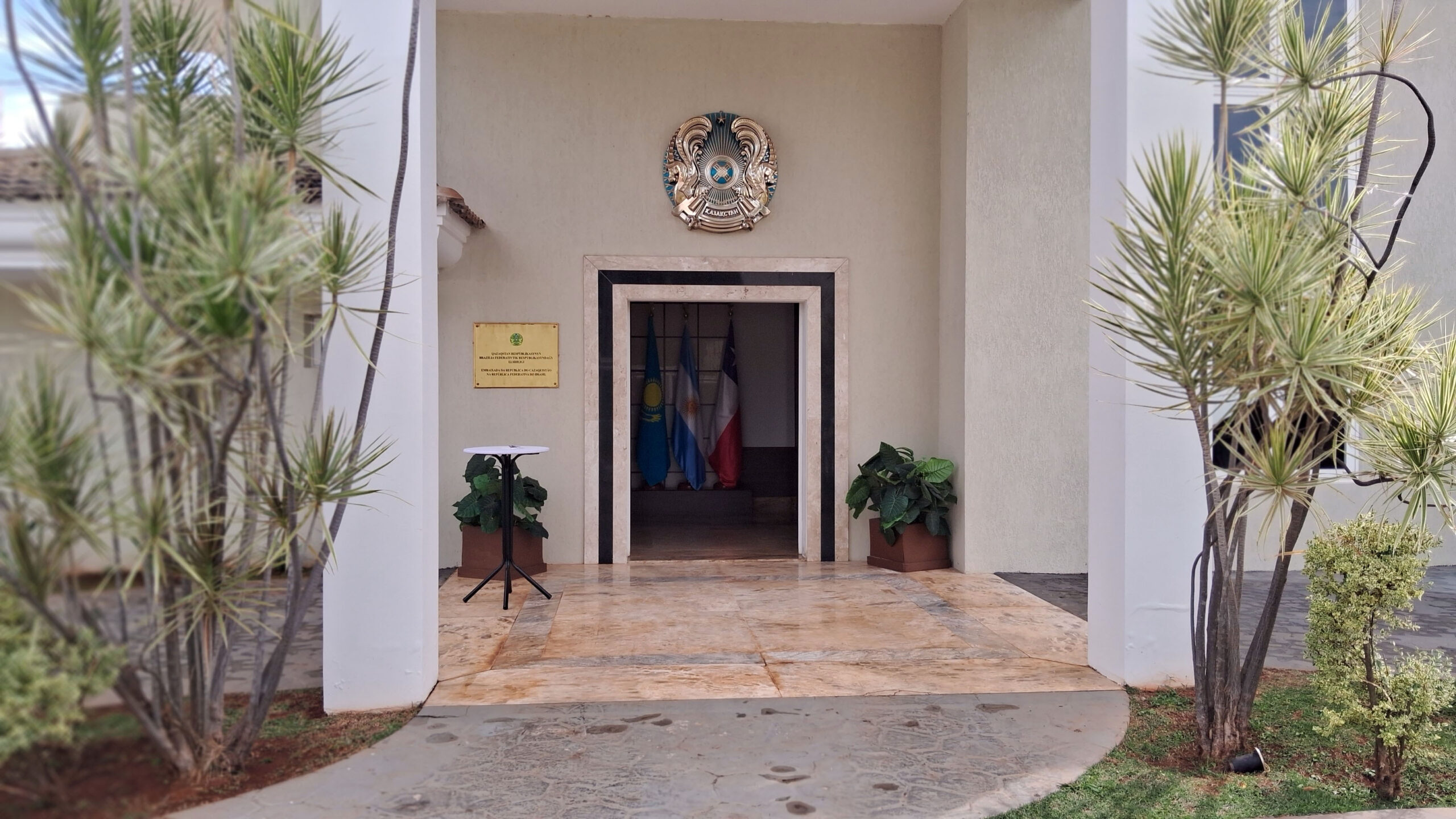
Official entrance of the Embassy, with the emblem of the Republic of Kazakhstan.
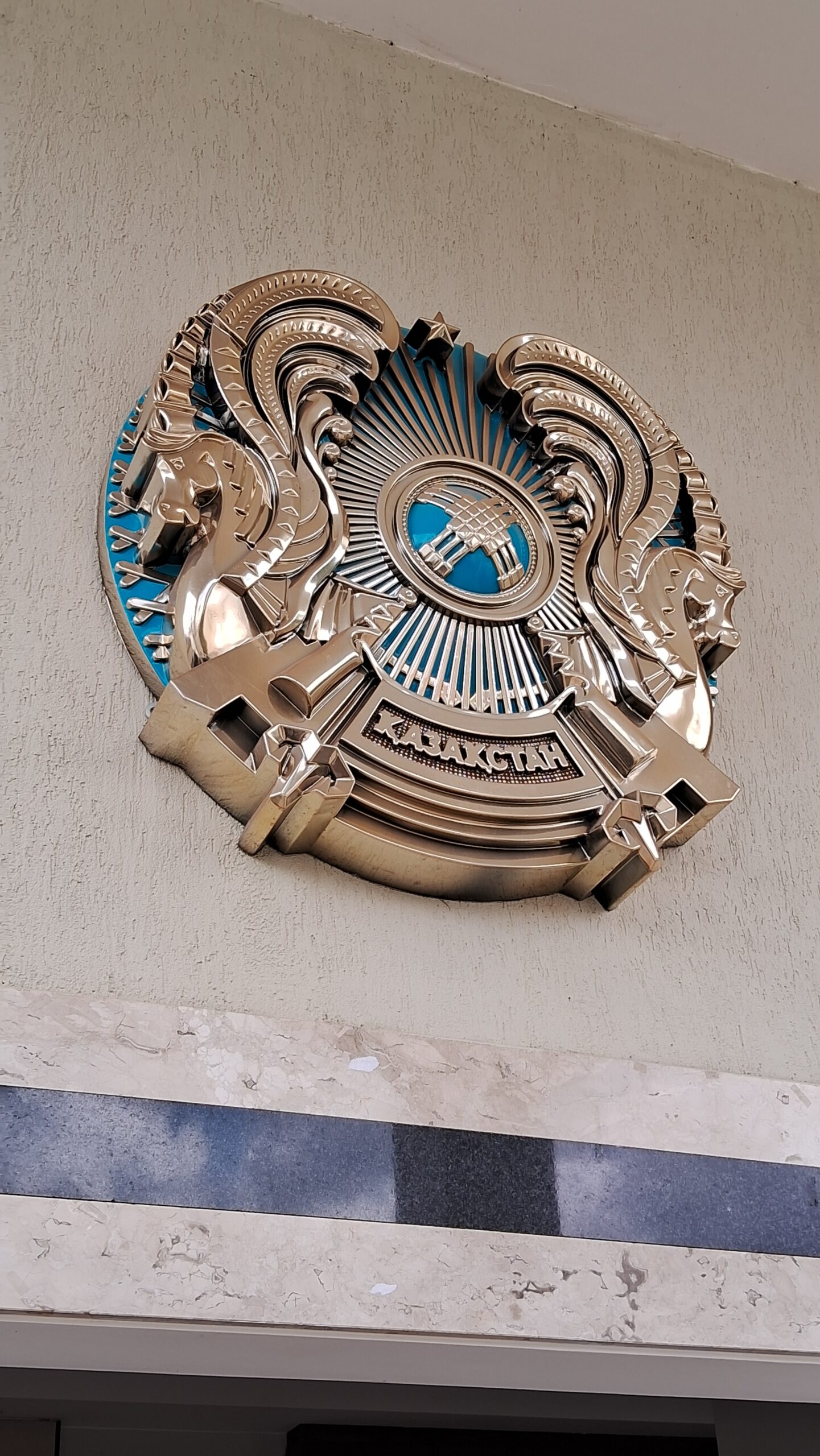
Emblem of the Republic of Kazakhstan.
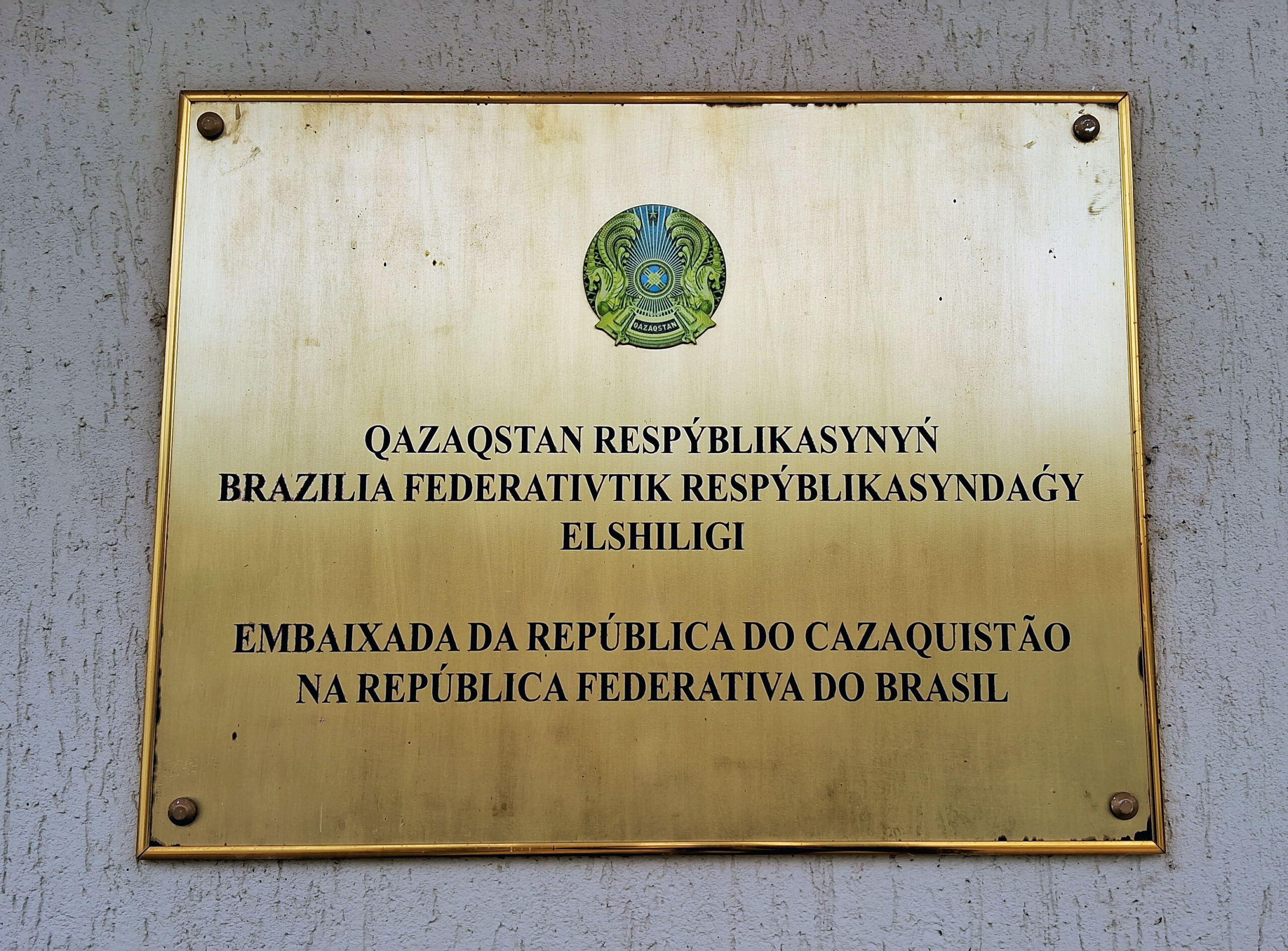
Official plaque of the Embassy of Kazakhstan in Brazil.
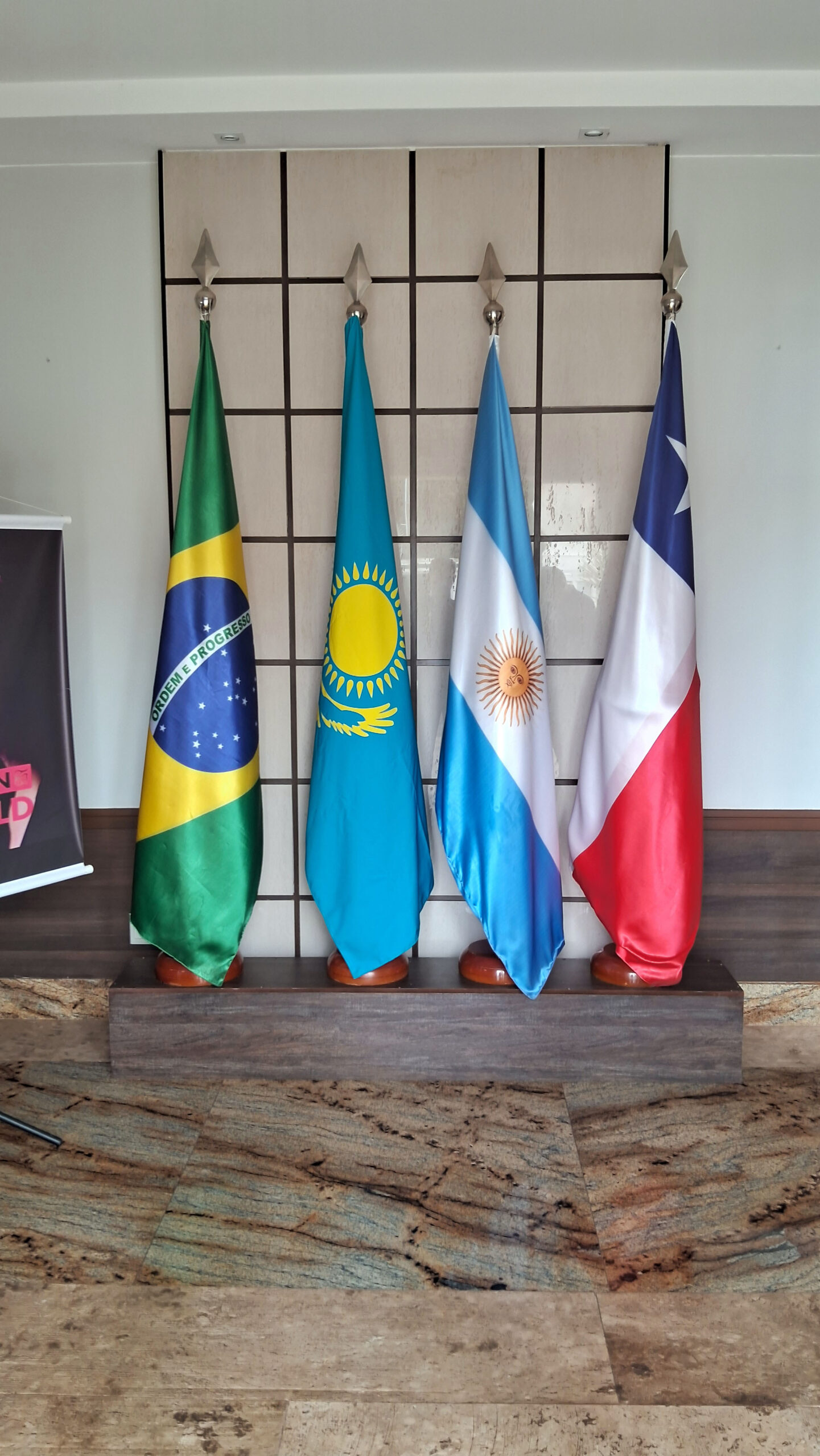
Flags of Brazil, Kazakhstan, Argentina and Chile, countries covered by the diplomatic representation of Kazakhstan in Brasília.
1. A concrete diplomatic meeting, with documents and direct participation from Kazakhstan
The meeting was not a simple general conversation. Several printed documents were presented, including elements related to Pioneer, as well as works by the Diplomatic Organization of Autistan on national autism strategies in different countries.
These documents showed that the initiative is not based on abstract intentions, but on real work involving analysis, international comparison, technical reflection and proposals in the field of public policies.
The physical presence of these documents, in a diplomatic meeting room, had particular importance: it showed serious preparation, structured files, comparisons between countries, and a capacity to contribute to precise work such as recommendations, guidelines, draft texts, public policies or national strategies related to autism.
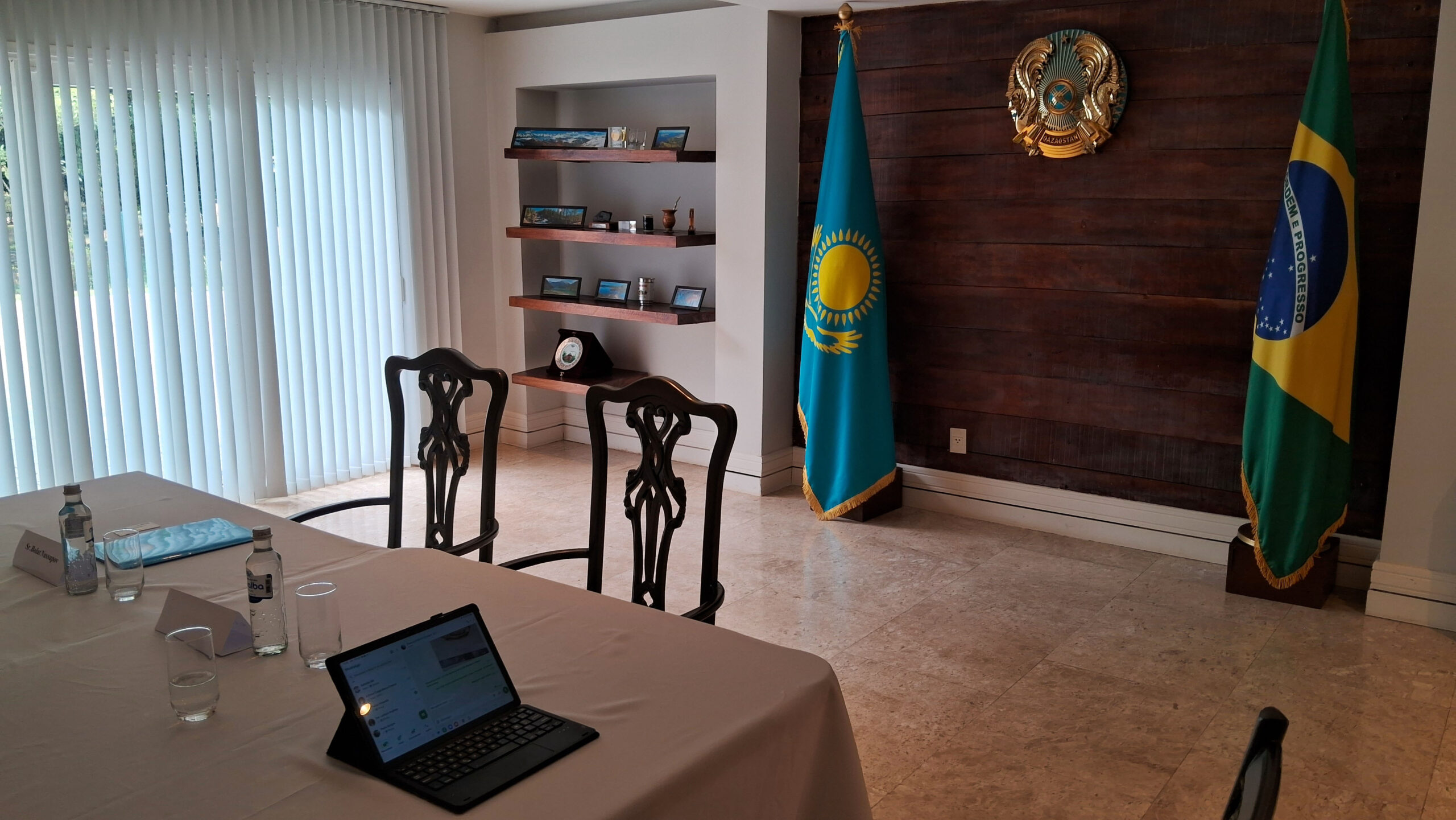
Meeting room of the Embassy of Kazakhstan in Brasília, with the official symbols of Kazakhstan and Brazil.
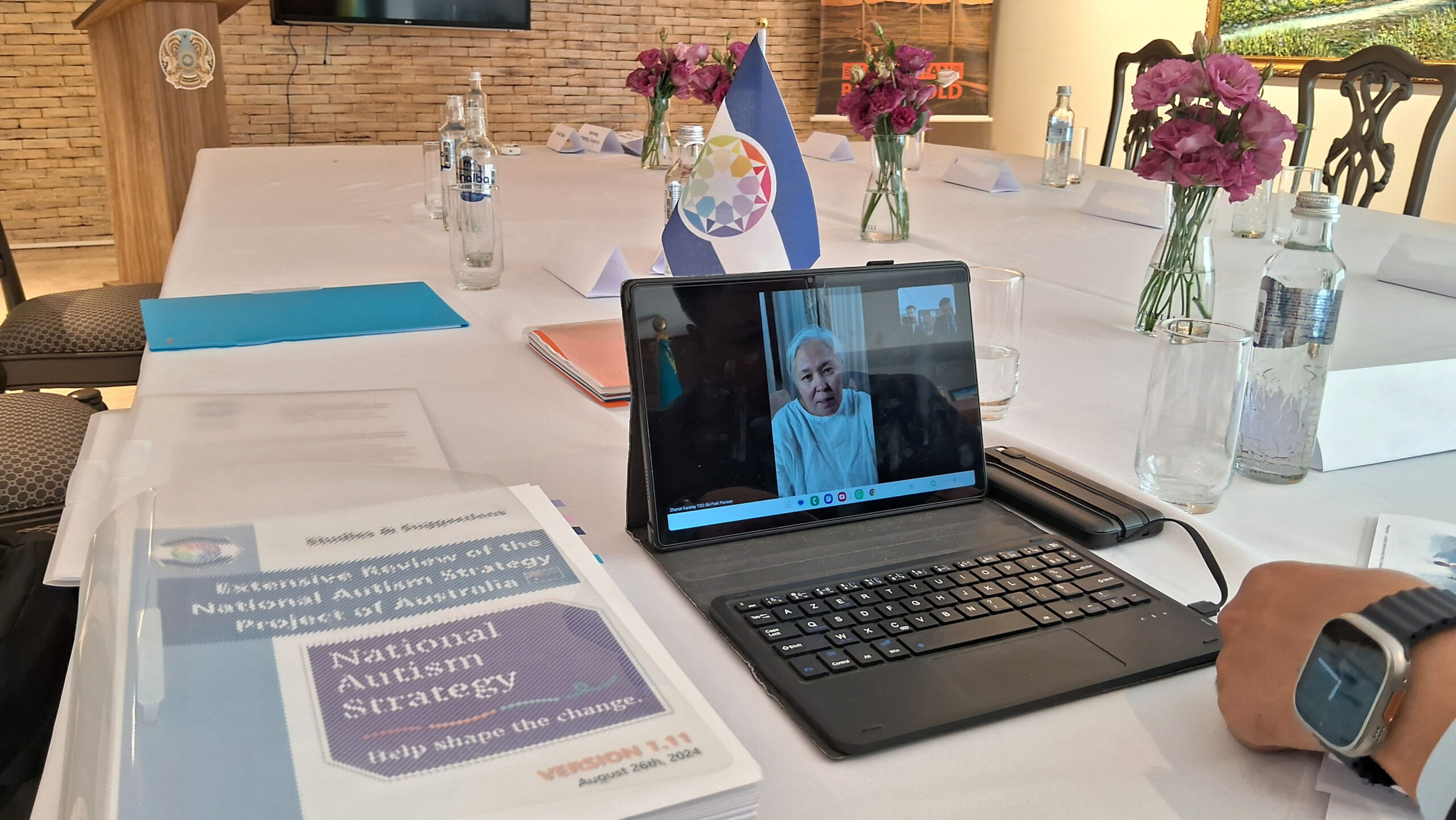
Zhanat Karatay participating in the meeting by videoconference from Kazakhstan.
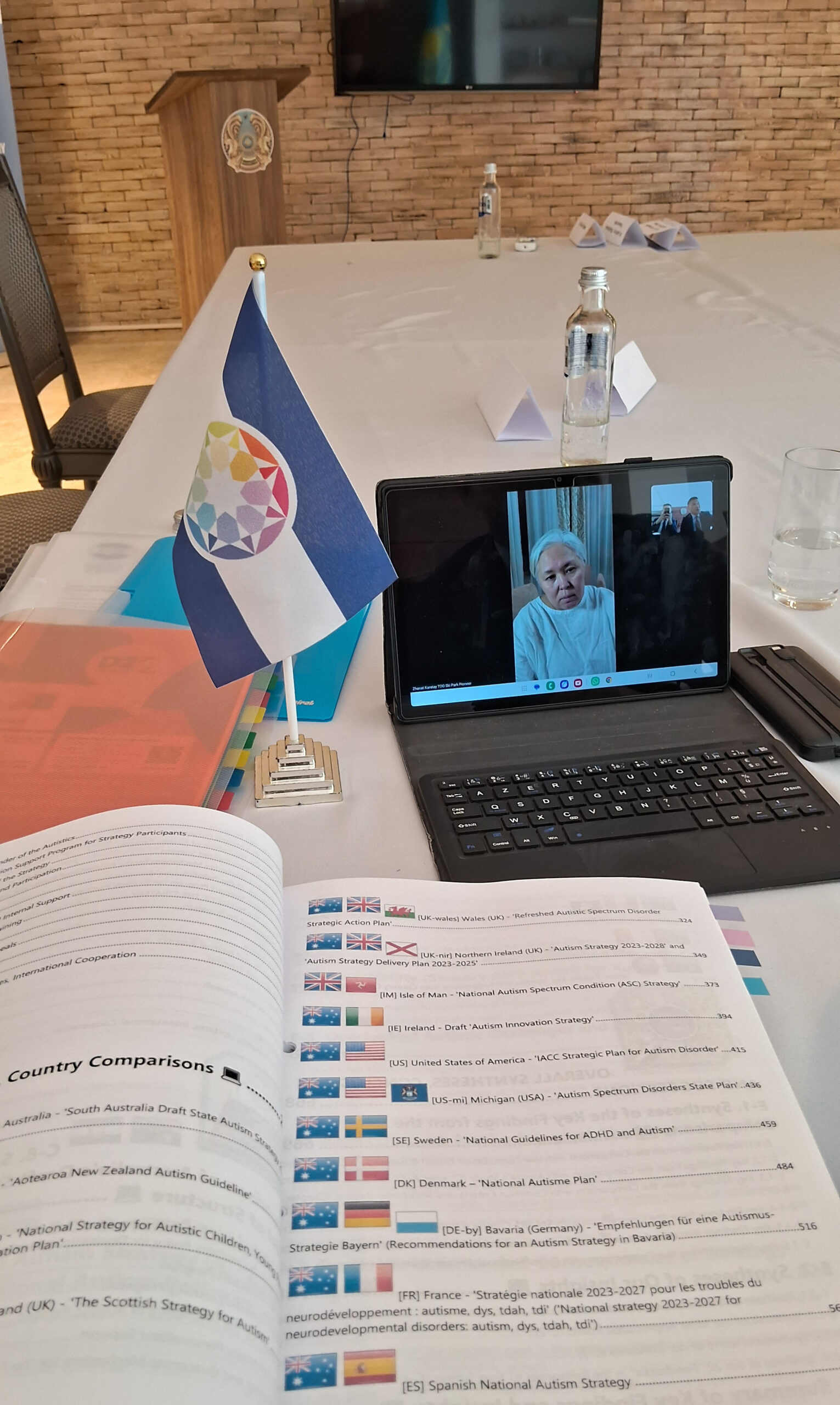
Working documents presented during the meeting, including works on national autism strategies and examples of public policies in different countries.
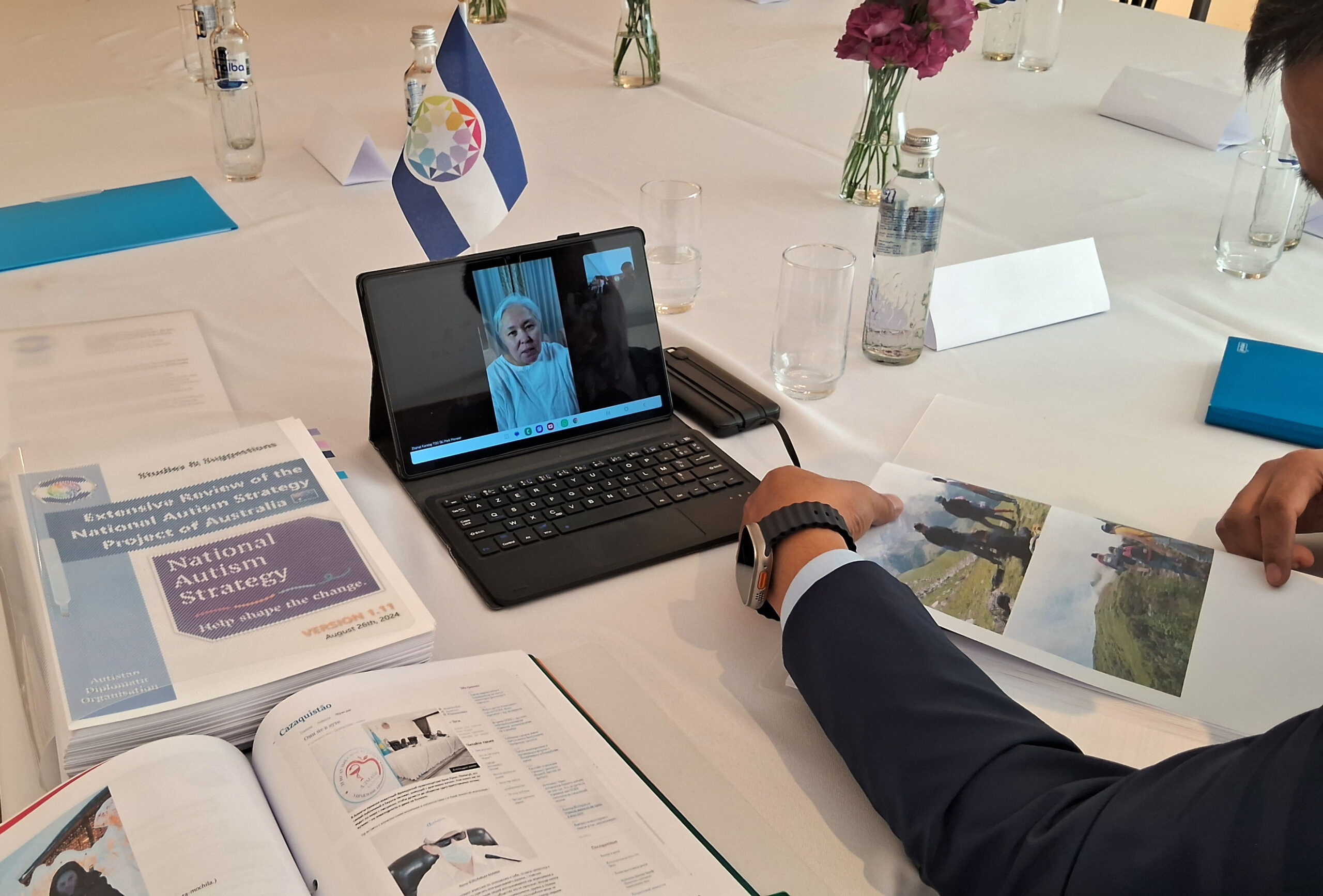
The videoconference with Zhanat Karatay, working documents on national autism strategies and the flag of the Diplomatic Organization of Autistan, while the Deputy Ambassador reads the printed documents.
This image largely summarizes the meaning of the meeting: Kazakhstan, diplomacy, autism, international cooperation and concrete work on public policies.
The participation of Zhanat Karatay by videoconference from Kazakhstan gave the meeting a directly concrete dimension. It made it possible to explain the reality of Pioneer, the current situation, the history of the project and the long-standing link with the Diplomatic Organization of Autistan.
This remote presence strengthened the value of the initiative: it was not merely an international organization speaking about a project located in Kazakhstan, but a direct dialogue with a Kazakh person in charge who is personally involved in the development of Pioneer.
The meeting therefore brought together several dimensions that are rarely present together: an embassy, an international autistic organization, a Kazakh field practitioner, public-policy documents, a concrete inclusive project and a possible reflection on the future of autism in Kazakhstan.
Above all, it made it possible for these elements to exist within the same diplomatic space: Pioneer, autism, the Diplomatic Organization of Autistan, international cooperation and the possibility of a future National Autism Plan.
2. Pioneer: an important inclusive mountain project in Kazakhstan
Pioneer Ski Park is a mountain resort located near Almaty, developed for several years by Zhanat Karatay and her husband. The project combines skiing activities, inclusive programmes, children’s camps, training, infrastructure, support for teenagers and young adults, and services progressively built around children, families and inclusion.
Zhanat Karatay explains that Pioneer welcomes ordinary children and children with developmental particularities, including autistic children, children with Down syndrome, children with cerebral palsy and other profiles. She also indicates that more than ten thousand children have gone through the programmes developed with the city of Almaty.
Pioneer thus represents an important human, social, educational and economic achievement. It is an inclusive ecosystem built over more than a decade, with accumulated experience, infrastructure, a progressively developed method, and a particular place in the Kazakh landscape of inclusion and autism.
This dimension is essential to understand why the Diplomatic Organization of Autistan considers Pioneer to be an important project, not only for Kazakhstan, but potentially also for a wider part of the region. To our knowledge, no other project of this kind, combining mountains, skiing, inclusion, autism, socialization, programmes for children and a non-defectological approach, exists in the region.
The current situation is therefore concerning because it risks reducing Pioneer to a simple land issue, whereas its real value includes:
- the programmes developed;
- the accumulated experience;
- the children and families concerned;
- the infrastructure built;
- the social and human value of the project;
- the inclusive and educational dimension of the site;
- the international reach of some of its reflections;
- and its potential importance for Kazakhstan and beyond.
3. The current situation: an official decision concerning Pioneer’s land
The Pioneer site is currently affected by an official decision of the Akimat of Almaty within the framework of the development of the Almaty mountain cluster. The meeting made it possible to present this situation and to explain why it raises significant concern.
The main risk is that the land may be considered primarily according to its land value, while Pioneer is an active resort, with social, educational and inclusive programmes developed over many years.
Zhanat Karatay also recalled that the project had received signs of support at the national level, particularly in Astana, and that Kazakh officials had already recognized the importance of supporting inclusive programmes and children’s tourism within the framework of mountain development in Almaty. An article published by Liter.kz notably mentions the commitment of Prime Minister Bektenov in favour of supporting inclusive programmes and children’s tourism in this framework: article by Liter.kz.
The issue therefore goes far beyond a land disagreement. It is a question of whether an inclusive achievement of great value, patiently built over more than eleven years, can be protected, developed and integrated into a broader strategy, instead of being weakened.
From this perspective, the Diplomatic Organization of Autistan wishes to help make the particular value of Pioneer better understood. This project must be understood as a complex inclusive achievement, combining a real economic activity, social programmes, considerable human experience and a possible contribution to the evolution of public policies on autism.
For a more detailed presentation of the situation of Pioneer, see also our article dedicated to the current situation of Pioneer, as well as Autistan Kazakhstan and the official website of Pioneer Ski Park.
4. Diplomatic listening and the prospect of future transmissions
The representative of the Embassy listened to the explanations and sought to clarify what was being requested in concrete terms. This clarification was important, because the situation of Pioneer combines several dimensions: a local issue in Kazakhstan, an important inclusive achievement, an international concern, and a possible broader reflection on autism and public policies.
The essential positive point is that the meeting made it possible to establish direct, human and institutional contact, and to open the possibility of transmitting written documents later to the competent authorities of Kazakhstan.
For the Diplomatic Organization of Autistan, this is important. A proposal or a file transmitted after a human meeting, in a real diplomatic setting, carries much more weight than a direct, impersonal and isolated sending. The meeting gives a face, a context, an explanation and a concrete reality to the documents that may be transmitted afterwards.
The meeting therefore made it possible not only to present an urgent concern regarding Pioneer, but also to create a first basis for dialogue for future written transmissions, more structured and more precise.
5. The determining role of the Diplomatic Organization of Autistan in the history of Pioneer, according to Zhanat Karatay
One of the most important elements of this meeting is that Zhanat Karatay herself explained the role played by the Diplomatic Organization of Autistan in the history of Pioneer.
This point is essential: the usefulness of the Diplomatic Organization of Autistan is not only asserted by itself. It is confirmed by a Kazakh person in charge, creator of a concrete, important and lasting project.
Zhanat Karatay recalled that the relationship with the Diplomatic Organization of Autistan goes back to the beginning of Pioneer’s development. This collaboration began in 2016, with the prolonged presence of the founder of the Organization at Pioneer for nearly two months, in the context of the inclusive summer camp and the first concrete experiments with this approach.
During this period, the Diplomatic Organization of Autistan provided advice, observations, analyses, corrections, practical adjustments and explanations concerning autism. This contribution helped to confirm and consolidate a non-defectological orientation already sensed by Zhanat Karatay, but still very rare in Kazakhstan at that time.
This cooperation was also expressed publicly in Almaty, during a conference about autism organized in 2016, very probably the first conference in Kazakhstan presenting a non-defectological approach to autism.
Zhanat Karatay was already involved in skiing and inclusion activities with children with developmental particularities. But the reflections, advice, exchanges, analyses and presence of the Diplomatic Organization of Autistan acted as a catalyst. They helped to make clearer, stronger and more fully assumed the idea that it was possible to go further: not by trying to “correct” autism, but by building a natural, active, respectful and inclusive framework allowing autistic children to learn, develop and participate.
This experience in 2016 confirmed in practice what had been discussed in theory: an approach based on the understanding of autism, the adaptation of the environment, trust in the children’s capacities and respect for autistic nature could produce positive results in a natural, collective and active setting.
This point is very important for understanding the value of this cooperation: the Diplomatic Organization of Autistan did not only bring general ideas. It contributed, at the right moment, to confirming a vision, encouraging an orientation, supporting a concrete achievement, and participating in the emergence of an experience that then developed over many years.
This contribution was the subject of a detailed report published on Autistan.kz: Efficient counselling from Autistan during an inclusive summer camp in Kazakhstan.
Zhanat Karatay also explained that the work of the Diplomatic Organization of Autistan is part of an international perspective, covering more than one hundred countries, and that the current situation of Pioneer raises concern at the international level.
She finally expressed the idea that the Diplomatic Organization of Autistan could help Kazakhstan develop broader cooperation around autism, particularly by contributing to a reflection on a future National Autism Plan.
In another video prepared before the meeting, Zhanat Karatay was even more precise. She explains that cooperation with international organizations of the autistic community played a very important role in the development of Pioneer.
Zhanat Karatay cites Autistan.org as the international autistic organization with which Pioneer began its first concrete collaboration as early as 2016.
She also indicates that this cooperation showed very positive effects, that the collaboration continues, and that it would be useful to bring representatives of the Diplomatic Organization of Autistan to Kazakhstan to help specialists and public authorities look at autism differently, from the point of view of an autistic person and an autistic analyst.
This constitutes an important external validation: a person directly involved in Kazakhstan confirms that the approach of the Diplomatic Organization of Autistan had concrete usefulness in a real project, developed on the ground over many years.
6. Two videos by Zhanat Karatay about Pioneer and the cooperation with Autistan
Before the meeting, Zhanat Karatay had prepared two short videos in Russian in order to clearly present the essential points: first the situation of Pioneer, then the cooperation with the Diplomatic Organization of Autistan.
These videos are included here as direct testimonies from Zhanat Karatay, complementing her intervention by videoconference during the meeting.
6.1. Video 1 — Presentation of Pioneer, its programmes and the current situation
In this first video, Zhanat Karatay introduces herself as a social entrepreneur, owner and creator of the Pioneer mountain resort, located at an altitude of 2,000 metres in the Ile-Alatau National Park, in Almaty.
She explains that Pioneer is an inclusive mountain resort where children learn to ski, but also a place where ordinary children and children with developmental particularities meet, including autistic children, children with Down syndrome, children with cerebral palsy and other profiles.
She indicates that Pioneer also has a children’s camp, where children with specific needs are welcomed, largely autistic children.
She then presents the current situation: within the framework of the development of the Almaty mountain cluster, the resort is affected by an official decision of the Akimat of Almaty concerning the project’s land.
She recalls that the project has always been supported in Astana, that national officials have expressed their support, and that Prime Minister Bektenov confirmed, during a government meeting, the need to support inclusive programmes and children’s tourism within the framework of the Almaty mountain cluster.
She also explains that more than ten thousand children with complex development have gone through Pioneer’s programmes over the years of cooperation with the Sports Department of the city of Almaty.
According to Zhanat Karatay, Pioneer today forms a complete ecosystem, including in particular:
- an inclusive camp for children;
- adapted alpine skiing;
- training for instructors, coaches and teachers;
- a centre for teenagers and young adults, called Campus Pioneer;
- and other important projects related to inclusion.
She also recalls that in 2019, using her methodology and in cooperation with the National Autistic Society of the United Kingdom, she created Inclusive Schoolchildren’s House No. 7, which was then transferred to the Education Department of the city of Almaty.
6.2. Video 2 — Cooperation with the Diplomatic Organization of Autistan
In the second video, Zhanat Karatay speaks more directly about the Diplomatic Organization of Autistan.
She explains that her project has a supranational character and that it is known abroad thanks to its rehabilitation programme.
She describes this approach as neuroaffirmative, that is, an approach according to which children are not “broken”, do not need to be repaired or transformed, but must be understood as they are, with an adaptation of the environment around them.
This approach is close to the non-defectological orientation promoted by the Diplomatic Organization of Autistan: respecting autistic nature, adapting the environment, and allowing autistic children to develop without trying to “repair” them or denature them.
Zhanat Karatay adds that cooperation with international organizations of the autistic community played a very important role in the development of Pioneer.
She cites Autistan.org as the international autistic organization with which Pioneer began its first concrete collaboration as early as 2016.
She indicates that this cooperation showed very positive effects and that the collaboration continues.
Finally, she expresses the wish that representatives of the Diplomatic Organization of Autistan could come to Kazakhstan to advise specialists and public authorities, in order to help them look at autism differently, from the point of view of an autistic person and an autistic analyst.
7. A non-defectological approach to autism
One of the central points of this meeting is the question of the approach to autism.
In most public policies, autism is still mainly approached through a medical, deficit-based or defectological framework. The Diplomatic Organization of Autistan proposes another approach: considering autism as a natural human particularity, while clearly distinguishing autism itself from the specific disorders related to autism.
This distinction is essential for building public policies that are more just, more effective and more respectful. In particular, it makes it possible to understand that many difficulties experienced by autistic people do not come from autism itself, but from the inadequacy of the social, administrative, sensory, relational and communication environment.
This is why accessibility, attitudinal barriers and adaptations of society are essential issues.
This approach respects autistic nature, but it does not exclude learning. On the contrary, it makes it possible to think about social learning, the acquisition of specific skills, autonomy, communication and the understanding of the non-autistic world in a more just and effective way, because it does not start from the idea that the autistic person should be “repaired”, but from the idea that they must be given the means to live, understand, learn, choose and participate in adapted conditions.
In other words, it is not about refusing learning, but about placing it within a respectful framework: autistic people may need social learning, practical skills, reference points, knowledge about non-autistic functioning and various acquisitions, but this learning must be designed to help them, not to deny their nature or force them to artificially imitate non-autistic people.
The meeting at the Embassy of Kazakhstan made it possible to begin raising these issues, even though the main objective remained the urgent situation of Pioneer.
8. Towards a future reflection on a national autism policy in Kazakhstan
The Diplomatic Organization of Autistan also began to raise the idea that, one day, Kazakhstan could develop a more complete, more structured and more accessible national autism policy.
This idea was not the main objective of the meeting, but it appeared naturally, because Pioneer already shows that another approach to autism is possible.
The Diplomatic Organization of Autistan presented some of its work on national autism strategies in different countries, in particular through comparative documents showing that several States, regions or governments have already developed specific plans or strategies.
During the meeting, the Diplomatic Organization of Autistan also stressed that, to its knowledge, no country in the region yet has a genuine structured National Autism Plan. Kazakhstan could therefore play a pioneering role, not only for itself, but also for Central Asia, by developing a modern, accessible, non-defectological national autism policy based on the real needs of autistic people.
This possibility is particularly interesting because Kazakhstan already has a concrete project that can serve as a point of support: Pioneer. A national autism policy should not be only an administrative text. It should rely on real experiences, on projects that work, on the needs of autistic people, on accessibility, on families, on educational and social environments, and on a non-defectological understanding of autism.
These documents show that Kazakhstan could, in the future, become a pioneering country in this field, if it chose to develop a national autism policy genuinely based on the needs of autistic people, accessibility and a non-defectological approach.
9. Complementary, human and constructive diplomacy
The approach of the Diplomatic Organization of Autistan falls within a form of complementary diplomacy, sometimes called Track II diplomacy or parallel diplomacy: a non-state, constructive approach based on information, dialogue, analysis of public policies and the creation of bridges between public authorities and an international human reality that is still very poorly understood, that of autistic people.
The Diplomatic Organization of Autistan occupies a particular place. It does not belong to the classical medical field, nor to an ordinary national association, nor to a usual political advocacy approach. Its role is to provide public authorities with precise information on autism, accessibility, attitudinal barriers, the real needs of autistic people, the distinction between autism and the specific disorders related to autism, and adapted public policies.
This position may be unusual for some institutions, not because it is weak or imprecise, but because traditional administrative frameworks almost never provide for a direct, international and non-defectological representation of the “world of autistic people”. This is precisely what makes this approach useful.
The meeting at the Embassy of Kazakhstan illustrates this logic: an atypical but serious international organization presents a concrete file, exchanges with a diplomatic representative, gives the floor to a Kazakh person directly concerned, and opens the possibility of future transmissions to the competent authorities.
10. Why this meeting is important in the long term
The importance of this meeting is not limited to what was decided immediately. A diplomatic meeting creates a trace, transforms an abstract initiative into a human relationship, and shows that there is a real organization, real work, real documents, real interlocutors and concrete projects.
This is particularly important for the Diplomatic Organization of Autistan, whose role remains unusual for many institutions.
This institutional presence is also supported by the existence of a professional office of the Organization in Brasília, making it possible to receive interlocutors, present documents and build serious relationships with public and diplomatic actors.
The photos of this meeting show:
- a real embassy;
- an official room;
- working documents;
- a videoconference with Zhanat Karatay;
- exchanges around Pioneer;
- reflections on national autism strategies;
- a non-state but serious diplomatic approach;
- and a calm, structured and constructive institutional presence.
These elements contribute to establishing the international credibility of the Diplomatic Organization of Autistan, not through abstract declarations, but through visible facts, meetings, documents, cooperation and human relations.
This meeting does not only create a possibility for general dialogue. It also opens the possibility of more precise work: analyses, written contributions, international comparisons, proposals for texts, guidelines, recommendations, public policies, concrete solutions and technical collaborations that can help the authorities better structure their actions concerning autism.
It can therefore become the starting point for more serious and more precise work: not only speaking about autism, but contributing to the development of texts, orientations, measures, cooperation frameworks and solutions adapted to the reality of autistic people and to the needs of Kazakhstan.
In the long term, this meeting shows, through visible facts and real cooperation, that the Diplomatic Organization of Autistan is a serious interlocutor, capable of bringing a particular understanding of autism and usefully contributing to public, institutional and diplomatic reflections.
11. Thanks and next steps
The Diplomatic Organization of Autistan thanks the Embassy of the Republic of Kazakhstan in Brasília for this meeting, as well as Zhanat Karatay for her direct participation from Kazakhstan and for her detailed explanations concerning Pioneer.
The next steps should consist of transmitting one or several written documents to the Embassy:
- first, concerning the urgent situation of Pioneer;
- then, later, concerning possibilities for broader cooperation around autism and public policies in Kazakhstan.
The immediate objective is to help make the importance of Pioneer understood and the need to preserve this inclusive achievement.
In the longer term, one of the important perspectives raised during this meeting is the possibility of a future National Autism Plan for Kazakhstan. To our knowledge, no country in Central Asia yet has such a structured framework. Kazakhstan could therefore play a pioneering role in the region, by developing a modern, accessible, non-defectological public policy based on the real needs of autistic people.
The Diplomatic Organization of Autistan could contribute to this reflection through international comparative analyses, proposals for texts, recommendations, guidelines, concrete solutions and technical collaboration with interested authorities or institutions.
The broader objective is to contribute, with respect and in a constructive spirit, to a better understanding of autism in Kazakhstan, based on the concrete experience of Pioneer, the international work of the Diplomatic Organization of Autistan, and the possibility of a future National Autism Plan for Kazakhstan.
From this perspective, Pioneer can be considered as a concrete example showing that a different approach to autism is possible: an approach that respects autistic nature, promotes useful learning, relies on the natural environment, develops children’s capacities and shows that public policies can be much more effective when they start from the real needs of autistic people.